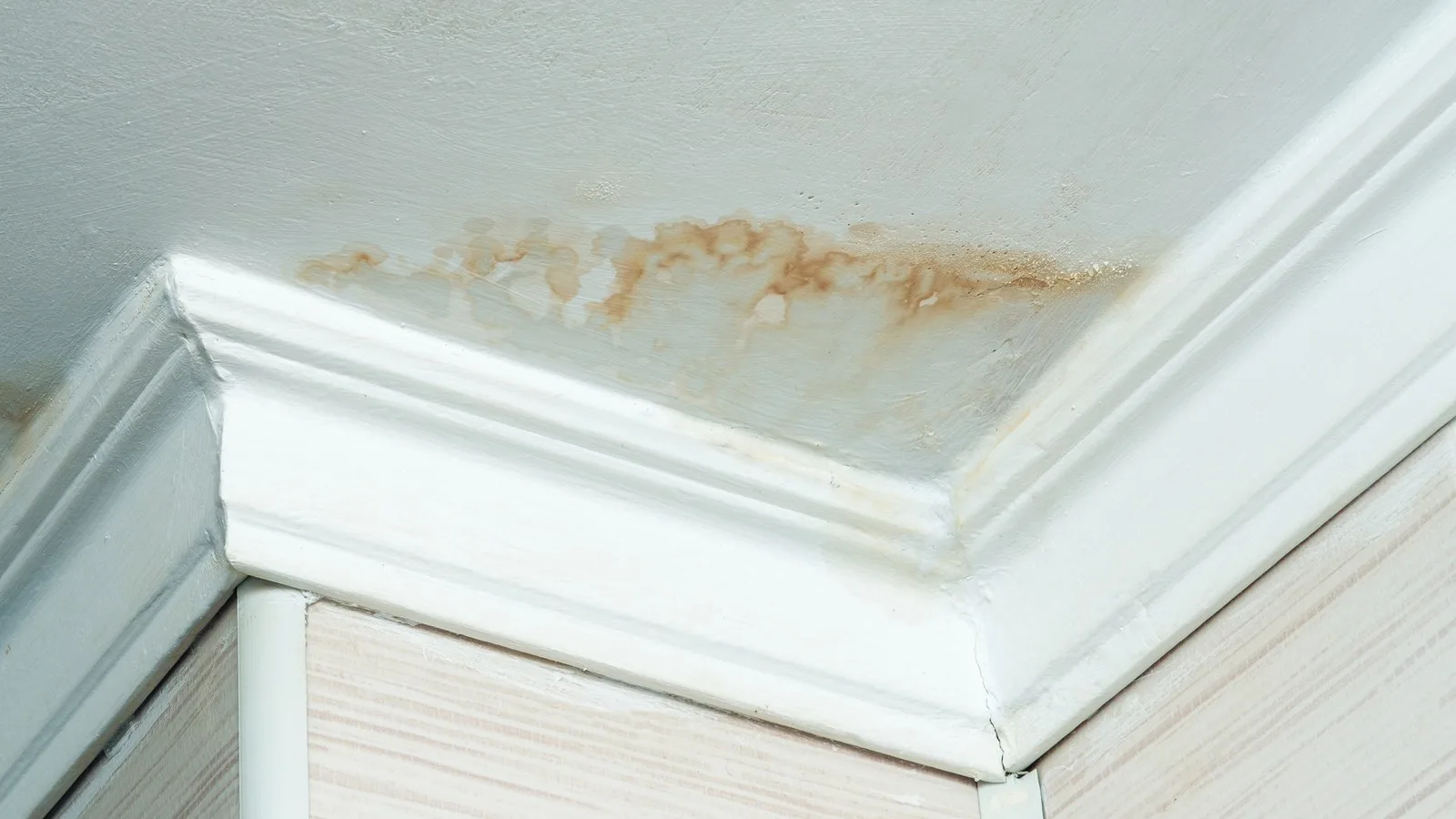
It usually starts with a sound. A drip where there shouldn't be one, then a ceiling that's darker than it was an hour ago. By the time you've found the stopcock, water is through the floorboards and into the kitchen units. Escape of water repairs are part of our reinstatement work in Bristol, and the first thing we tell people is simple: the house can be put back. It follows a sequence, and once you know it, it's much less frightening.
The first 48 hours
Before anyone talks about rebuilding, the aim is to stop things getting worse.
- Turn the water off at the stopcock. If water is anywhere near lights, sockets or the consumer unit, switch the electricity off too and leave it off until it's been tested.
- Photograph everything before it's moved, lifted or thrown away.
- Ring your insurer early if you're insured, and keep receipts for anything you spend stopping the damage.
- Keep damaged items until you know whether anyone needs to see them.
On a job like this, the first visit is a walk round the house with you: finding the source, dropping any ceiling that's holding water (a plasterboard ceiling full of water can come down without warning), lifting soaked carpet and underlay, and getting the electrics tested by the NICEIC-registered electricians we use. Then we work out which rooms can stay in use. After most leaks, you can stay at home.
Drying out properly, and why it can't be rushed
This is the stage people find hardest, because it looks like nothing is happening. Dehumidifiers and air movers run day and night. We'd normally take moisture readings in the joists, the plaster and the floor, and write them down so you can see the trend.
Drying usually takes weeks, not days. The Association of British Insurers makes the same point in its consumer guidance on home insurance: drying out a property can take many weeks, and repairing it before it's properly dry is likely to lead to damp and mould.
Here's what rushing looks like six months later:
- new plaster blowing off a wall that was still wet behind it
- engineered boards cupping as the subfloor dries out underneath
- mould behind kitchen units refitted against a damp wall
- a musty smell nobody can trace
So nothing is closed up until the readings say so. Our piece on why old Bristol houses get damp explains how moisture moves through older walls.
Strip-out: what comes out and what can be saved
Some materials recover once they're dry. Others are finished the moment they get wet. The rough pattern we see on site:
| Material | Usually | Why |
|---|---|---|
| Plasterboard ceilings and walls | Replaced | The board loses strength and grows mould |
| Chipboard floor decking | Replaced | It swells and never goes back |
| Wet mineral wool insulation | Replaced | It slumps and holds water |
| Kitchen carcasses | Often replaced | Chipboard bases swell from the feet up |
| Solid floorboards and joists | Usually kept | Dried, checked, wet ends replaced |
| Doors, worktops, appliances | Judged one by one | Some recover, some warp |
One more check in older houses. The HSE says any home built or refurbished before 2000 may contain asbestos, including in textured decorative coatings. If a damaged ceiling has an old textured finish, it gets tested before anyone pulls it down.
Ideally, everything is photographed and dated as it comes out.
Escape of water repairs: putting it back, and putting it back better
The order matters more than the speed:
- Fix the cause first: the pipe, the tank, the appliance or the roof. There's no point plastering under a leak that will happen again.
- Structure: joist ends, wall plates, any floor that has moved.
- First fix electrics and plumbing while the walls are open.
- Plaster, screed and flooring, once the readings allow.
- Second fix, kitchen, bathroom, decoration.
Where we can, we work room by room, so there's somewhere finished to sleep and somewhere clean to eat. Dust screens go up and we clean down at the end of each day, as on any build you're living through.
A leak is also the one time a room is already stripped back. In Portishead, a dishwasher leak flooded the downstairs of a three-storey timber-frame home, and the owners used the moment to remodel rather than simply replace, including new bifold doors. Here's how that reinstatement became a remodel. If you want upgrades, talk to your insurer or loss assessor about them before work starts. We can keep like-for-like reinstatement and any upgrades on separate lines of the quote, so everyone can see which is which.
How builders and insurers fit together, and where we stop
- You, or a loss assessor you appoint, deal with the claim.
- Your insurer's loss adjuster assesses the damage for the insurer.
- We are the contractor. We work alongside the adjuster with a detailed, itemised scope and quote written to be read line by line, photographs of everything, and straight answers to technical questions.
We don't negotiate claims, we can't tell you what a policy will pay, and we won't promise an outcome. Handling claims is a regulated activity, and we are builders. On our BS9 attic leak rescue, an insurer and a loss adjuster were both involved and the client handled that side directly. Our part was the scope, the photographs and the works: six weeks on site, including a new bathroom and new internal doors throughout (the full BS9 attic leak story). Every leak is different, so we give you a timeline once we've opened up and seen the readings.
What two customers said
Linda found us "after a massive leak from our attic so they whole house needed work". Of the weeks that followed, she wrote: "They were attentive, professional, helpful and kind, even when I was having a meltdown" (Linda C., Google review, 2023).
Hannah came to us through family: "Dan and Craig were recommended to us through some family having completed work following a burst pipe." Her own project was a kitchen, bathroom and semi-renovation, and she picks out what matters most after any leak: "Their communication is excellent especially with anything that was unexpected." (Hannah M., Google review, 2024).
There are more on our reviews page. We're TrustMark registered (licence 4264445), and our accreditations are set out on our guarantee and accreditations page.
Frequently asked questions
How long does a house take to dry out after a leak?
Usually several weeks. Dehumidifiers and air movers run until moisture readings in the joists, plaster and floors come down, and nothing is plastered, screeded or floored before then. Sealing damp in causes a second problem later.
Can I stay at home during escape of water repairs?
Often, yes. The work can usually be phased room by room, with the rooms we're working in sealed off and somewhere finished to sleep and somewhere clean to eat. If the electrics can't be made safe or the drying is severe, we'll tell you plainly that moving out for a while is the better option.
Do you deal with my insurance company?
Not on your behalf. You, or a loss assessor you appoint, deal with the claim. We work alongside the loss adjuster with an itemised scope and quote, photographs of the works and direct answers to technical questions.
Should I wait for the loss adjuster before doing anything?
Not for the urgent things. Stopping the water, making the house safe and starting the drying shouldn't wait. Ring your insurer first if you can, and keep photographs and receipts. The rebuild scope is agreed once the adjuster has been and we've opened up to see the true extent.
What do escape of water repairs cost?
There's no menu price, because the damage sets the scope rather than a design. We quote it like any other build: detailed and itemised, after we've opened up and seen what the water did. The price only changes if you agree the change first.
If water is coming through a ceiling right now, turn it off at the stopcock first. Then call Dan or Craig on 0117 251 0365, or tell us what's happened and we'll walk the house with you.