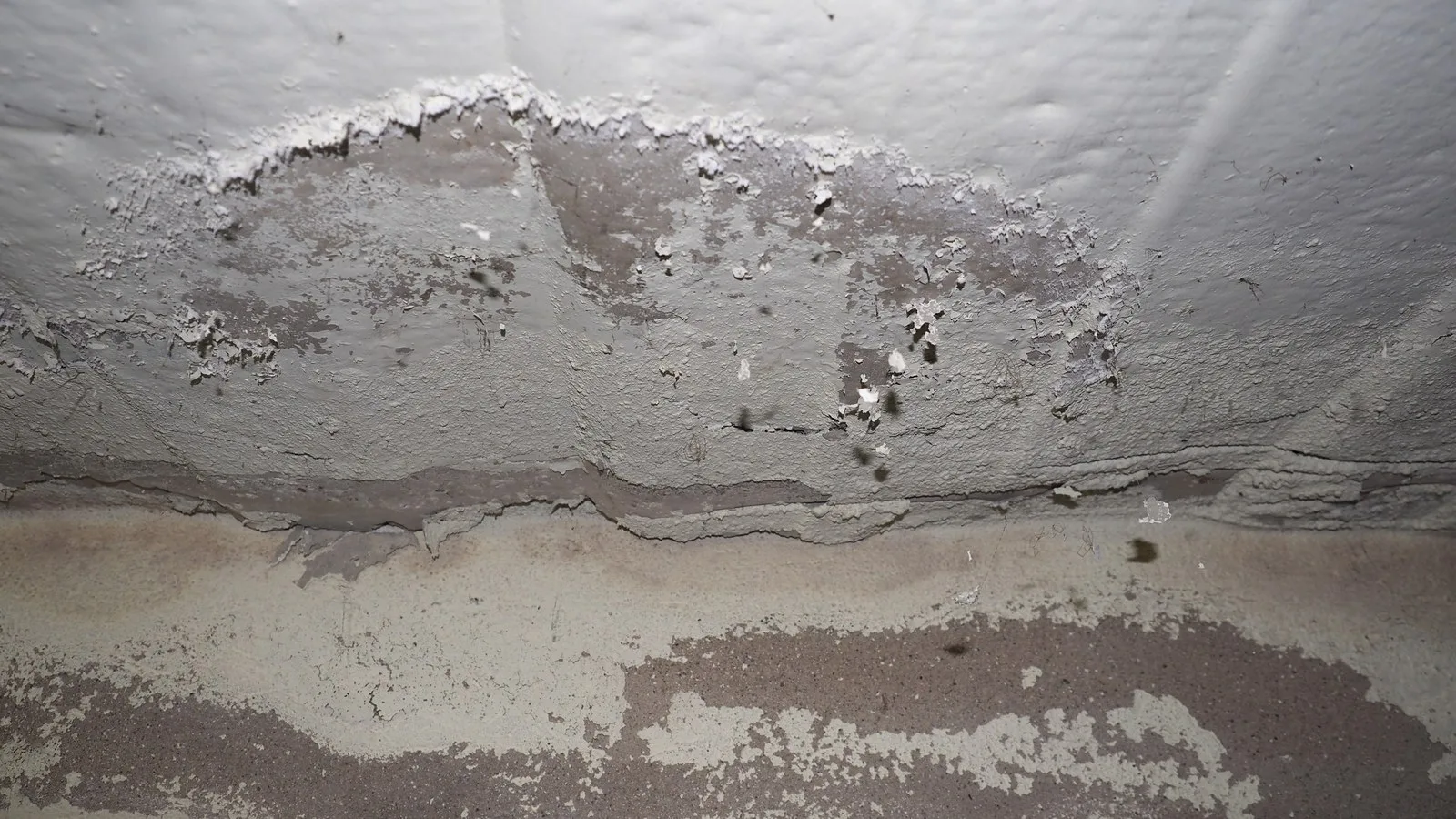
It happens most years around now. The heating goes on, the windows stay shut, and a grey bloom appears in the corner of a back bedroom. Or a tide mark creeps up the wall behind the sofa. Damp in old houses is common, and it is rarely the disaster people fear. Most of it has a plain cause you can find and fix. We're Dan and Craig (Daniel Webster and Craig Cook), and this is how we deal with it on Bristol sites.
Three kinds of damp in old houses, and why the diagnosis matters
The government's guidance on damp and mould in the home sorts damp into types. Condensation is the most common. Penetrating damp is water getting in from outside. Rising damp is ground moisture moving up through walls and floors, and the guidance says it is usually found in older properties and is often misdiagnosed. Leaks from pipes and appliances are a fourth kind; our reinstatement works page covers putting a home back together after one.
| Type | What you tend to see | Usual cause | What fixes it |
|---|---|---|---|
| Condensation | Black mould in corners and behind furniture | Moist air meeting cold walls | Ventilation, steady heating, working fans |
| Penetrating damp | Patches at any height, worse after rain | Gutters, pointing, render, flashings | Repair the defect, then let the wall dry |
| Rising damp | A tide mark and salts low on ground-floor walls | A bridged or failed damp-proof course | Remove what bridges it; treat only after proper diagnosis |
Each is fixed differently, so the diagnosis is everything. Historic England, writing with RICS and the Property Care Association, warns that time and money can be wasted if the cause of damp is not properly diagnosed, and that the wrong remedial work can make things worse.
Why damp shows up in autumn
Most damp problems don't start in autumn. The weather just makes them visible.
- Windows shut, heating on. Less fresh air moves through the house, so moisture from showers and cooking stays put.
- Washing comes inside. A rack of drying washing in the back bedroom puts its water straight into the air.
- Walls get colder. A solid wall is colder on its inside face than a modern insulated one, so moist air condenses there first.
- Leaves and rain arrive together. Gutters fill just as the heavy rain starts.
The upside is that October is a good time to look. Stand outside in the rain and watch where the water goes.
The usual causes in a Bristol terrace
Most of Bristol's Victorian and Edwardian terraces have solid walls with no cavity. They were built to take on some moisture and dry out again. Damp starts when something stops that drying, or lets in more water than the wall can shed. (We cover what else hides behind the plaster in what Bristol's Victorian terraces hide.)
- Blocked or leaking gutters. One blocked gutter can soak the same patch of wall all winter. Clear them once the leaves are down, and watch them in heavy rain.
- Bridged damp-proof courses. A patio or flower bed built up above the damp-proof course lets ground water walk straight past it.
- Blocked air bricks. Suspended timber floors need air moving underneath. The government guidance asks whether under-floor spaces are ventilated so the timber stays dry.
- Cement render and gypsum plaster. Dense finishes on a solid wall trap moisture, so it travels higher up the wall.
- Failed pointing and cracked render. Water gets in through the gaps, then can't get out.
- Poor ventilation. Fireplaces boarded up with no vent, bathroom fans that don't work, trickle vents taped shut.
Fixes that work, and one that is oversold
Repair the cause first
Clear the gutters. Lower the path, or cut a gravel strip so the ground sits below the damp-proof course. Unblock the air bricks. Repoint where the joints have gone. Then let the wall dry before anyone replasters. Plastering over a wet wall only hides the problem for a season.
Let the wall breathe
The Society for the Protection of Ancient Buildings says that replacing hard cement render or pointing with a lime-based mortar may be the best solution, and that waterproof renders and coatings can make damp worse. Inside, lime plaster and breathable paint suit a solid wall better than dense gypsum and vinyl emulsion.
Ventilate properly
For condensation, this is usually the fix: fans that actually extract, trickle vents left open, a vent where a fireplace was boarded up. It's also the least disruptive work on this list.
The oversold one: chemical injection
An injected damp-proof course is often sold as the answer to any damp low on a wall. Where an original damp-proof course has failed, and a proper diagnosis confirms it, injection has a place. It won't fix a blocked gutter, a bridged damp-proof course or condensation. SPAB says true rising damp is rarer than commonly perceived, and is widely misdiagnosed from moisture meter readings alone.
When the cause isn't obvious, an independent survey from someone who isn't also selling the treatment is money well spent.
When the floor or an old extension has to come out
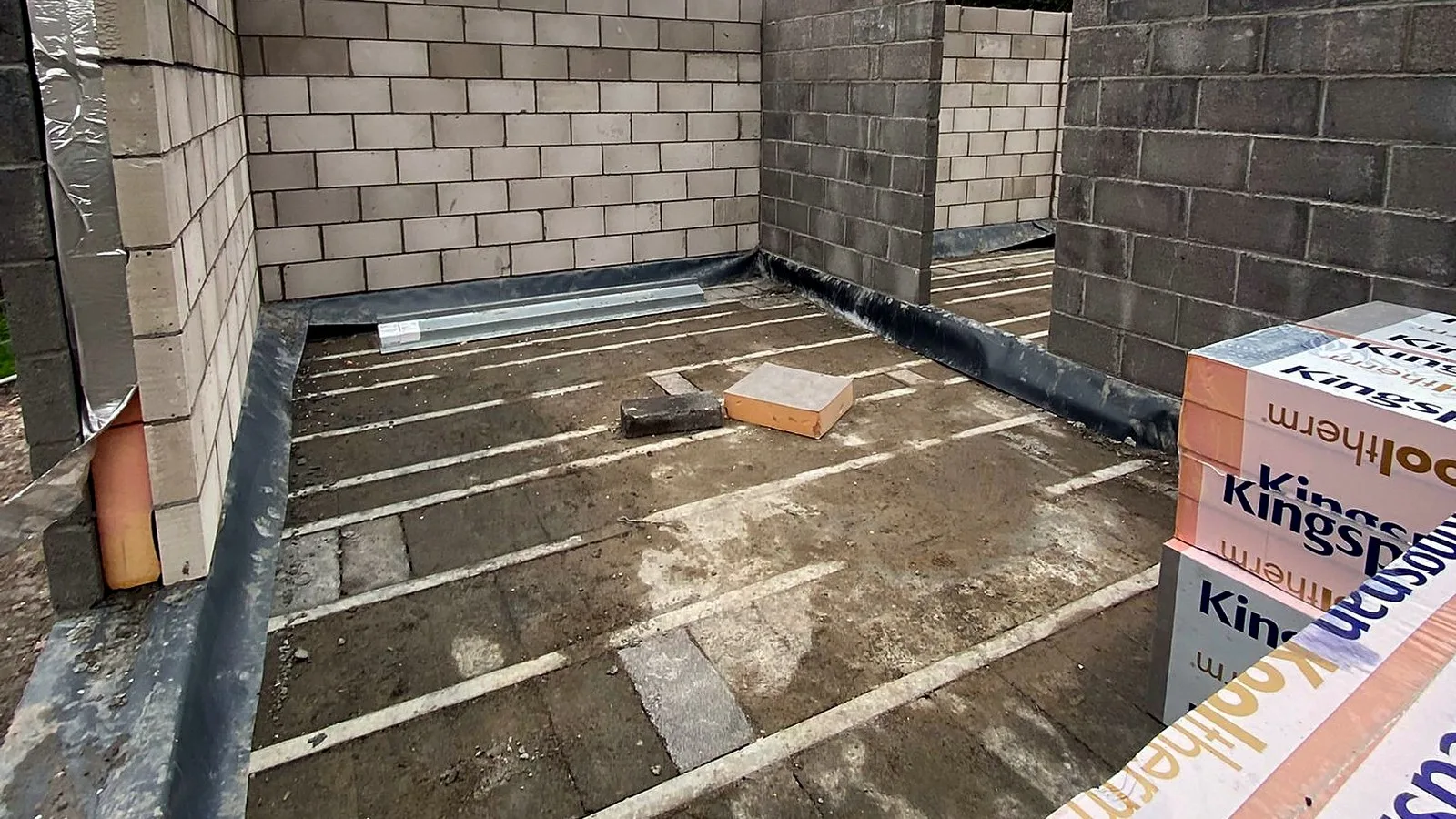
Sometimes repair isn't enough: a solid floor laid with no membrane, a timber floor that has rotted, or an old lean-to built without a damp-proof course. Then the answer is to take it out and rebuild, with a new floor membrane tied into the wall's damp-proof course, insulation to current building regulations, and finishes that suit the wall. The tie-in matters. A membrane that stops short can push moisture sideways into the walls.
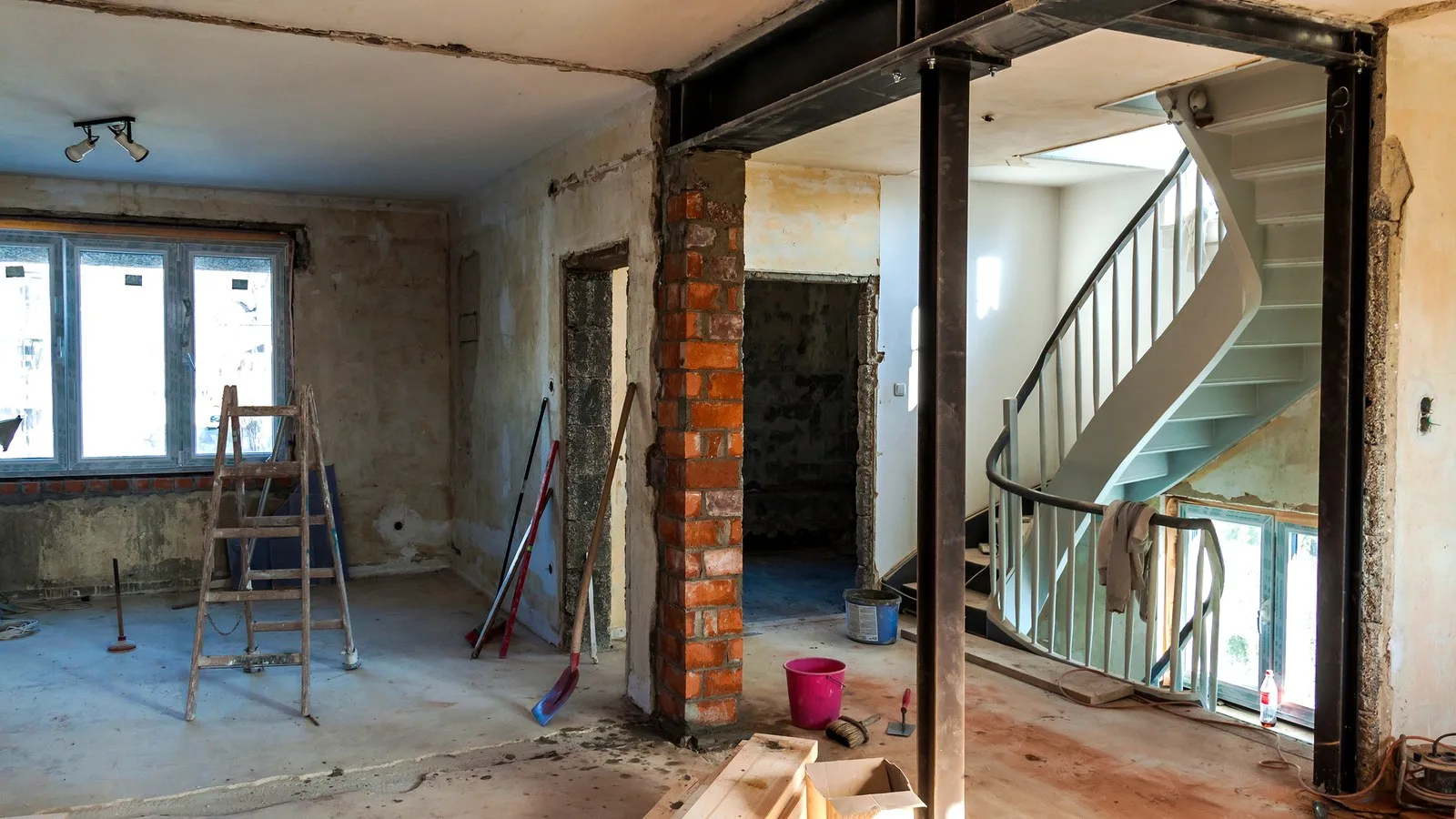
This is house renovation work, and it is disruptive. The room is out of use while the floor is dug out, laid and dried, and a kitchen may need taking out and storing. On a job like this we sheet off the rest of the house and clean down at the end of each day, as our guide to living at home during a build explains. On one recent project we dug out the hallway, kitchen, study, utility and WC, laid a new block-and-beam floor with a membrane and insulation, and refitted the client's own kitchen in 12 weeks. Our subsidence repairs write-up shows how.
What Alan said about an extension with rising damp
Old buildings rarely have just one problem. Alan's didn't.
"Dan and his team carried out a complete refurbishment of an old extension at the back of our house that had significant rising damp and structural issues. It was a very challenging project to undertake with numerous problems to solve along the way. For every problem that arose Dan, James and Rich had a practical solution…"
Alan F., Google review, 2023
That's what opening up an old house is like. You find things, explain them, and agree the fix and the cost before you carry on. Alan's review sits with the rest on our reviews page. We're TrustMark registered (licence 4264445), and our guarantee and accreditations are set out in full.
Frequently asked questions
Is damp in old houses usually rising damp?
Usually not. The government's guidance says condensation is the most common form of damp, and that rising damp is often misdiagnosed. Penetrating damp from gutters, pointing and render is common in older houses too. Rising damp does happen, usually where a damp-proof course is bridged or has failed.
Does chemical damp-proofing work on old houses?
It can, where an original damp-proof course has failed and a proper diagnosis confirms it. It won't cure condensation, leaking gutters, a bridged damp-proof course or raised ground levels. Before you pay for injection, ask what else was ruled out.
Is damp bad for your health?
The government's guidance says damp and mould mainly affect the airways and lungs, and can also affect the eyes and skin. People with health conditions, children and older adults are at greater risk. If you're worried about symptoms, speak to your GP.
Who should diagnose damp in an old house?
Someone who isn't also selling the cure. When we visit to quote a job like this, we look at gutters, ground levels, render, pointing and ventilation, and price the repairs. Where the cause isn't clear, an independent damp survey is worth having first.
The sooner the cause is fixed, the longer the wall has to dry out before winter. Tell us about your project and send a few photos of the wall, inside and out. We'll call you back within one working day.