You've found a crack. Maybe it runs from the corner of a window, maybe the back door has started to catch. It's easy to assume the worst. Most cracks in a house are harmless: plaster shrinking, timber drying, an old building moving with the seasons. A few are signs of subsidence, and those need dealing with in the right order. Here's how to tell them apart, how crack widths are graded, what to do first, and how subsidence is put right.
Subsidence, settlement and heave
| What's happening | Typical cause | |
|---|---|---|
| Subsidence | The ground under the foundations drops or shrinks away | Clay drying out, tree roots, leaking drains |
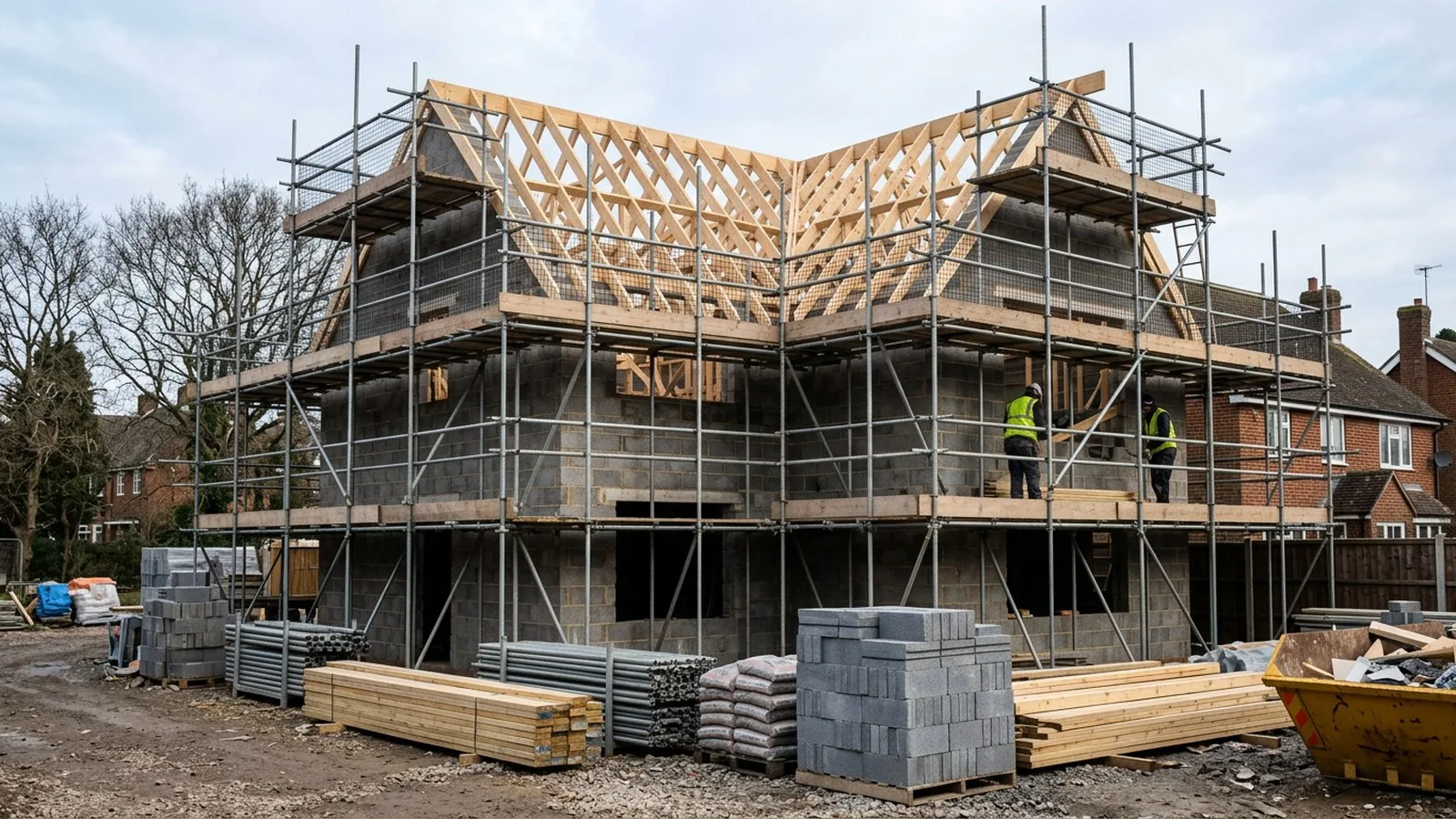
| Settlement | The building settles under its own weight | New houses and extensions bedding in |
| Heave | The ground swells and lifts the foundations | Clay rewetting, often after a tree is removed |
The British Geological Survey's guide to shrinking and swelling soils explains how clay soils shrink in dry weather and swell when they get wet again, and lists the triggers: dry summers, trees and hedges planted, pruned hard or removed, changes to drainage and paving, and leaks from water pipes or drains. It also notes that settlement can crack walls, especially in newly built homes and extensions. Settlement usually stops once the building has bedded in. Subsidence and heave can keep going until the cause is dealt with.
The cracks to worry about
The BGS guide, citing the Association of British Insurers, lists the cracks that point to subsidence. They:
- are more than 3 mm wide
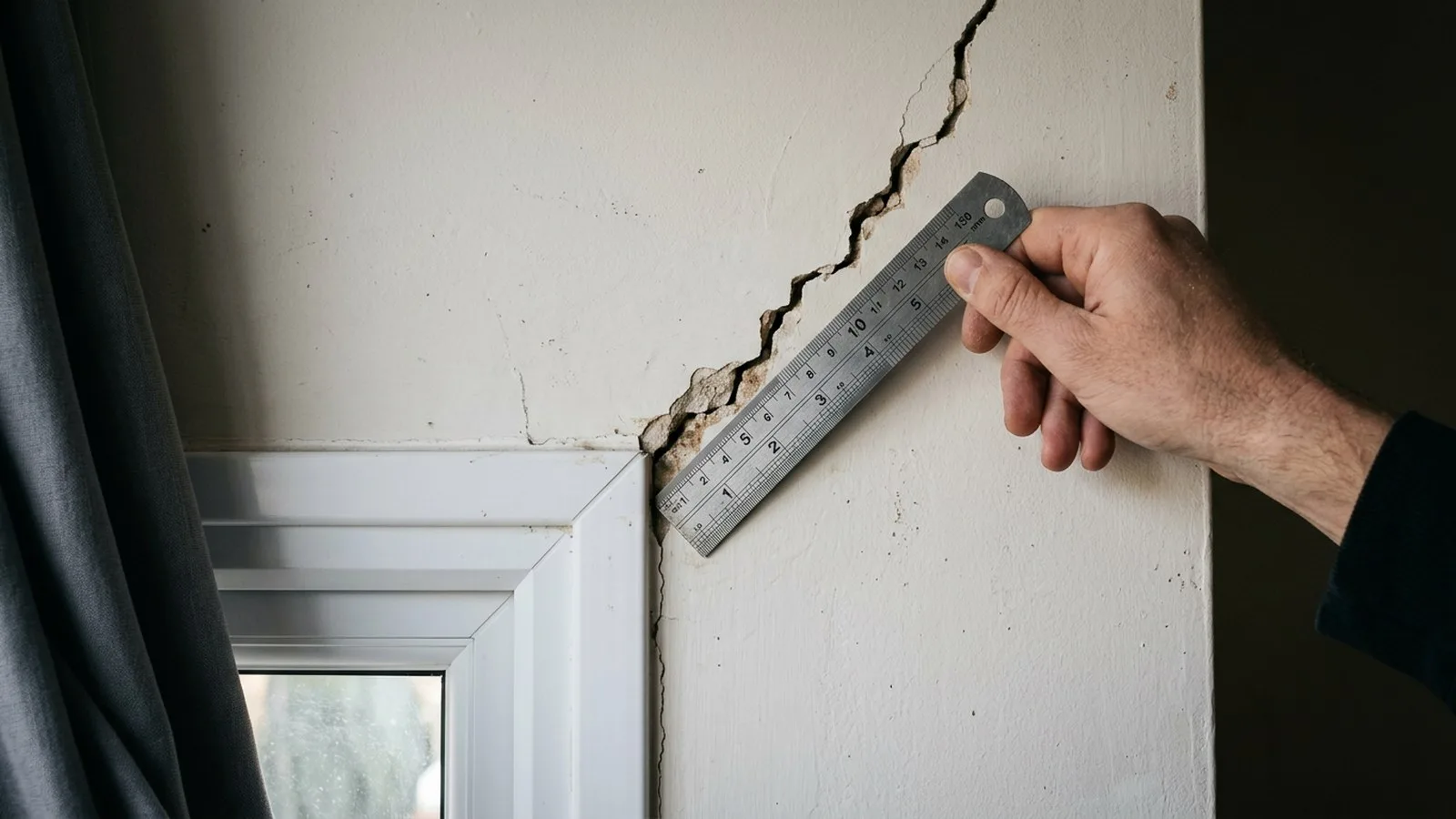
- run diagonally across the wall
- taper, wider at one end than the other
- show both inside and outside
- appear near doors and windows
- ripple the wallpaper
A hairline crack where ceiling meets wall, or across new plaster, is almost always shrinkage. A diagonal crack you can fit a coin into, running from a window corner, deserves a closer look.
How crack widths are graded
Engineers and surveyors grade damage using BRE Digest 251, Assessment of damage in low-rise buildings. The typical widths for each category are:
| Category | Description | Typical crack width |
|---|---|---|
| 0 | Hairline | Up to 0.1 mm |
| 1 | Fine | Up to 1 mm |
| 2 | Easily filled | Up to 5 mm |
| 3 | Needs some opening up | 5 mm to 15 mm |
| 4 | Extensive damage | 15 mm to 25 mm |
| 5 | Structural damage | Over 25 mm |
BRE's own summary, assessing cracks in houses, puts it simply: categories 0 to 2, up to 5 mm, are generally aesthetic and need redecoration. Categories 3 and 4 affect weather-tightness and how doors and windows work. Category 5 is about stability and is likely to need structural work. BRE also stresses that the number of cracks, and whether they are getting wider, matter as much as the width on the day.
The other signs: doors, windows, floors
Cracks rarely come alone. Look for:
- Doors and windows that start to stick or no longer latch, when they used to close sweetly.
- Gaps opening between skirting boards and the floor, or where a window frame meets the wall.
- Floors that slope or feel soft near an outside wall.
- An extension or bay pulling away from the main house, with a crack along the joint.
- Cracks that open in summer and close in winter. That's the classic pattern of clay and trees.
One sticking door after a wet week is usually swollen timber. Several of these signs together, on the same side of the house, tell a story.
What to do first, in order
- Don't fill it yet. Photograph each crack with a ruler or a coin beside it, and date the photo. A filled crack hides the evidence.
- Watch it. A simple tell-tale gauge fixed across the crack shows whether it's moving. Check it monthly and keep the readings.
- Look at the drains. Leaking drains are a common cause, and a CCTV drain survey shows their condition. You commission the survey; we can tell you what it needs to cover.
- Look up. Is there a large tree or hedge nearby? Don't cut it down in a hurry: removing a mature tree from clay can lead to heave as the ground rewets. In a Bristol conservation area, trees with a trunk of 75 mm across at 1.5 m high are protected and the council needs six weeks' notice of most work (Bristol City Council).
- Check the ground's history. If your area was ever mined, GOV.UK explains how to check if a property is affected by coal mining, starting with a free search.
- Talk to your insurer early, before any repair starts. What a policy covers is between you and them. We can't advise on insurance or claims.
- Get a structural engineer. They diagnose the cause, may monitor movement over a period so seasonal changes show up, and specify the repair.
How subsidence is repaired
The repair always starts with the cause. Fixing cracks over ground that's still moving just buys you the same cracks again.
- Drain repairs. Relining or replacing leaking pipes so the ground stops being washed out or softened.
- Tree management. Pruning, a root barrier or removal, as the engineer and an arboricultural report advise.
- Underpinning. Taking the foundations deeper, in sections, to firmer ground. The Planning Portal is clear that underpinning needs building regulations approval and a structural design. Our guide to extension foundation depths explains why clay and trees push foundations down.
- Crack stitching and rebuilding. Once movement has stopped, cracked masonry is stitched or rebuilt. Our wall stitching and structural renovation article shows how.
- A new ground floor. Where floors have dropped, they're dug out and replaced.
We won't pretend structural repairs are tidy. Underpinning and floor work mean rooms out of use, noise and dust. On a job like this we seal off the work area, keep a route through the house and clean down every day. Site hours are 8am to 5pm, Monday to Friday.
Where we come in
Once the cause is known and the engineer has specified the repair, we're the contractor who builds it. Our subsidence repairs article follows one 12-week job: five rooms dug out, the existing foundations shored up, new footings and a new block-and-beam floor, insulated to modern standards, then the client's own kitchen put back on top.
Where there's a claim, we work alongside the policyholder's loss assessor or the insurer's loss adjuster as the contractor. We give detailed, itemised quotes that set out each repair, and the price only changes if the change is agreed first. Our reinstatement works page explains how that work runs, and our groundworks team is in-house. Structural repairs without a claim sit within our house renovation service.
Frequently asked questions
What are the first signs of subsidence?
Usually cracks: diagonal, more than 3 mm wide, wider at one end, near doors and windows, and visible inside and out. Doors and windows that start to stick, rippling wallpaper and gaps under skirting boards often appear alongside them.
How wide does a crack have to be to worry about?
Under BRE Digest 251, cracks up to about 5 mm are generally aesthetic and need redecorating. From 5 mm up, damage starts to affect weather-tightness and doors and windows, and cracks over 25 mm are structural. Whether a crack is growing matters as much as its width.
What's the difference between subsidence and settlement?
Settlement is a building bedding down under its own weight, common in new houses and extensions, and it usually stops. Subsidence is the ground beneath the foundations shrinking or dropping away, often because of clay, trees or leaking drains, and it can continue until the cause is fixed.
Can subsidence be fixed?
Yes. Once an engineer has found the cause, it's dealt with first: drains repaired, trees managed, or foundations underpinned. Then cracks are stitched or rebuilt and damaged floors replaced. Underpinning needs building regulations approval and a structural design.
Should I fill a crack I think is subsidence?
Not yet. Photograph it with a ruler beside it, date the photo, and monitor it with a tell-tale gauge. Filling it too early hides whether it's moving, which is exactly what an engineer needs to know.
Tell us about your project. We'll call you back within one working day: get in touch here.