Tall sash windows with panelled shutters. A fireplace in the bedroom. An arched alcove nobody would think to build now. That was the house on Dowry Square in Hotwells when we started a seven-week refurbishment there. Period property renovation is mostly about restraint: knowing which parts of an old house are doing their job, which need repair, and which should be left alone. Here's how we approach it in Bristol's Georgian, Victorian and Edwardian homes.
Start with what the house already does well
Old houses were built to manage moisture differently from modern ones. Solid walls of brick or stone, lime mortar and lime plaster let damp in and let it out again. Timber sashes can be taken apart and mended. Shutters were the original insulation. Before anything is replaced, ask what it does and whether it still works.
The trouble in a period home rarely comes from the original features. It usually comes from well-meant updates of the last 60 years: cement render, gypsum plaster on damp walls, plastic paint, uPVC windows, blocked fireplaces. Undoing those is often half the job.
Georgian, Victorian, Edwardian: what to look for
| Era | Roughly | What you'll often find in Bristol |
|---|---|---|
| Georgian | 1714 to 1837 | Flat fronts in brick or stone, small-paned sashes set close to the face of the wall, panelled shutters, fanlights over panelled doors |
| Victorian | 1837 to 1901 | Bays, larger panes, decorative cornicing and ceiling roses, Pennant stone with Bath stone details, encaustic tiled paths |
| Edwardian | 1901 to 1910 | Wider halls, timber porches, more light, often brick with render or timber detail |
Bristol City Council's Clifton and Hotwells character appraisal describes Hotwells as the earliest part of that area to be built up, with early Georgian brick terraces from the Hotwell Spa years, and a material palette of red brick, stone details, timber sashes and panelled doors. If you own a Victorian terrace instead, our article on what Bristol's Victorian terraces hide covers what we usually find behind the plaster.
Breathable walls and why gypsum can cause damp
Most period walls in Bristol are solid, with no cavity. They stay dry by letting moisture evaporate from both faces. The Society for the Protection of Ancient Buildings explains in its advice on lime that lime-based materials let old structures breathe and move gently, and that Portland cement, gypsum plaster and plastic paints have shortcomings that can seriously harm historic fabric.
In practice that means:
- Plaster. Where old lime plaster is sound, keep it and patch it in lime. Gypsum plaster on a solid wall that gets damp tends to hold the moisture and break down.
- Paint. Vinyl emulsion over lime plaster seals the surface. Limewash, distemper or a vapour-open mineral or clay paint lets it breathe.
- Mortar and render. Repoint and render in lime, not cement, on soft brick and stone.
If a wall is already damp, find out why before you replaster. Our guide to damp in old houses works through the usual causes in order.
Windows, shutters, floors and fireplaces
Sash windows. Bristol City Council's guidance on traditional windows is blunt: repair and restoration of traditional timber windows should always be the first option, and they can almost always be repaired, even in quite poor condition, at significantly less cost than complete replacement. Draught-proofing comes next, then secondary glazing. The same guidance says secondary glazing with insulated shutters can cut heat loss through the window by up to 77% compared with single glazing. If you fit secondary glazing, it advises leaving the outer sashes without draught-proofing, so the gap between can ventilate and doesn't fill with condensation.
Shutters. Free them, ease them and use them. Closed at night, they're one of the best upgrades a Georgian window has.
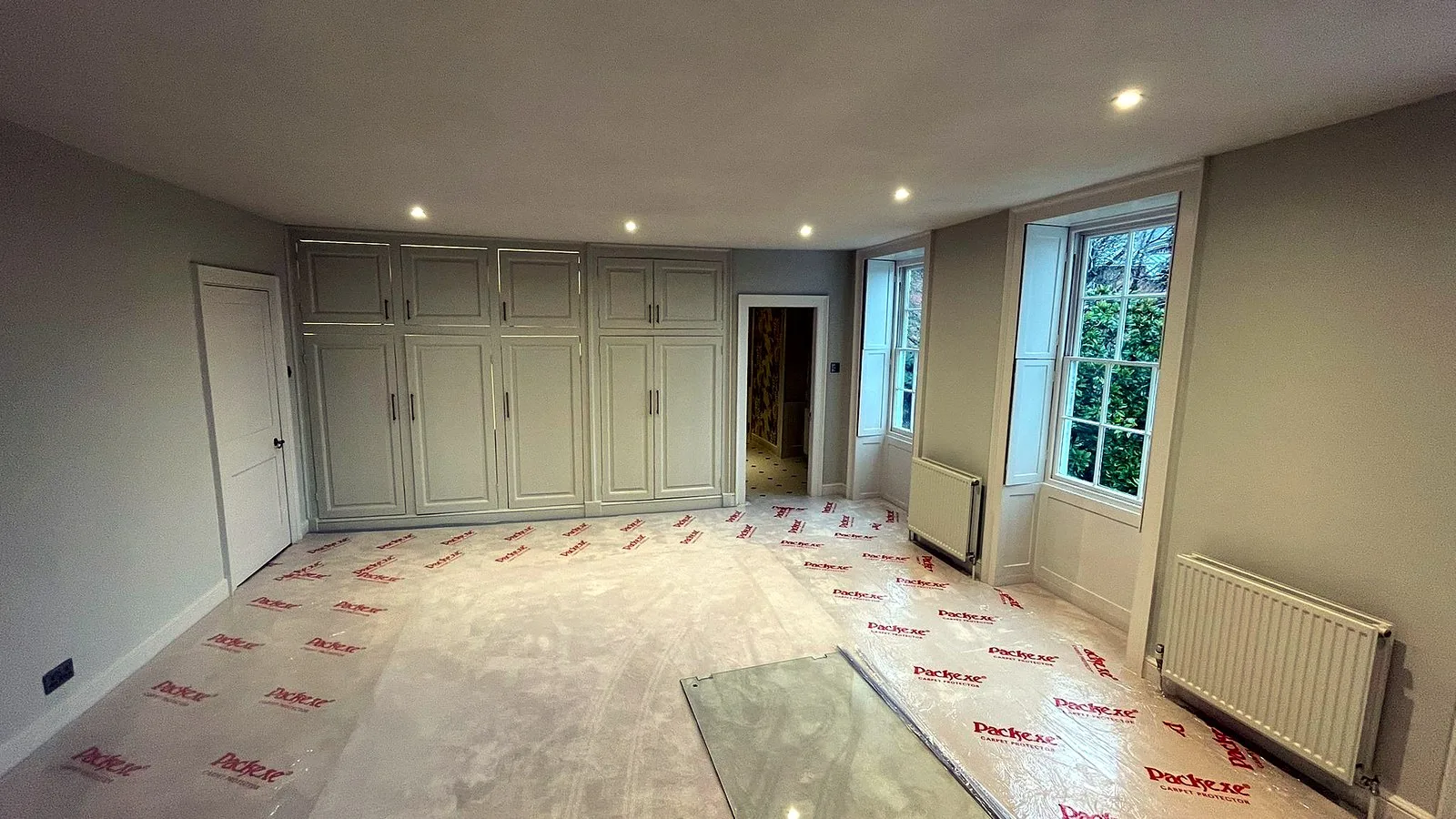
Floors. Old boards can be lifted for pipes and cables, numbered and relaid. Protect them during work: on a job like this we lay protection film and boards before the first tool comes out.
Fireplaces. Keep the surround even if you never light it. A chimney that's capped needs ventilating, or it can become a source of damp.
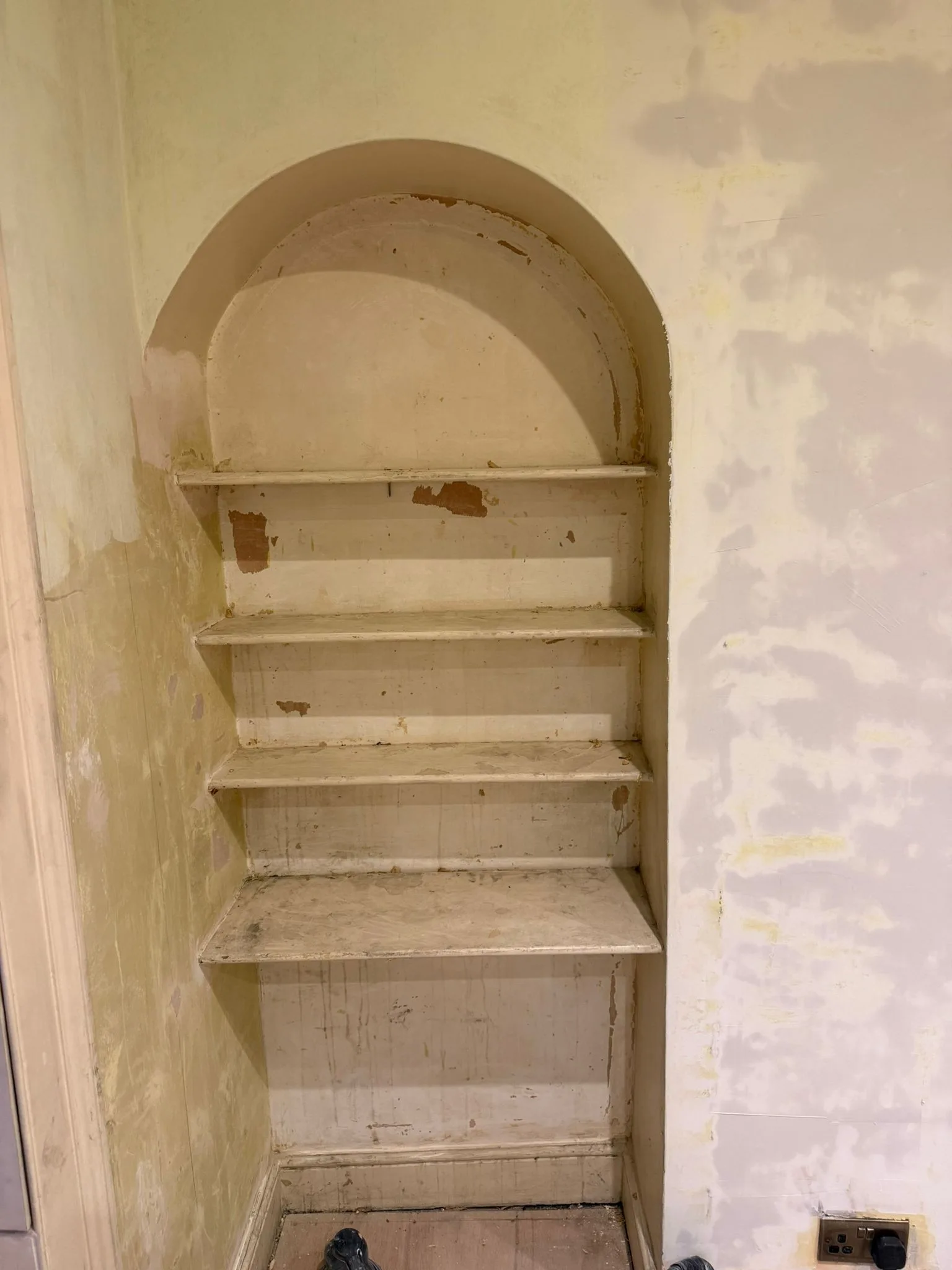
The arched alcove shelving at Dowry Square in Hotwells before redecoration.
Conservation areas and consent
Bristol has 33 conservation areas, and they have stricter planning controls than other places, according to the council's conservation areas page. Dowry Square sits within the Clifton and Hotwells conservation area, designated in 1972. In a conservation area:
- side extensions and roof extensions that would otherwise be permitted development need planning permission
- the council's windows guidance says changing the windows of a flat in any building in a conservation area needs planning permission
- trees with a trunk of 75 mm or more across, measured at 1.5 m high, are protected, and the council needs six weeks' notice of most tree work (Bristol City Council)
- an Article 4 direction can remove further permitted development rights, so check with the council before you change anything on the front
Listing is a separate question from conservation areas. If a house is listed, you need consent for works to a listed building for changes that affect its character, inside as well as out, and the council says making changes without consent is against the law (Bristol City Council). You can check a property's status on the council's Know Your Place map. Ask before you strip anything out.
A real Georgian refurbishment in Hotwells
At Dowry Square the brief was en-suite alterations, including turning a bath into a walk-in shower, and bedroom and en-suite works with bespoke joinery, new flooring and decorating. It took seven weeks.
Protection went down first, because nothing in a room like that can be bought again. The shower area was tanked before tiling, which matters over timber floors. Everything new was set out from true lines and scribed to walls that are anything but straight. Dan and Craig are carpenters by trade, and that setting out is most of the skill. The finished rooms work around the sash windows, shutters and fireplace rather than over them. The full story is in our Georgian en-suite article.
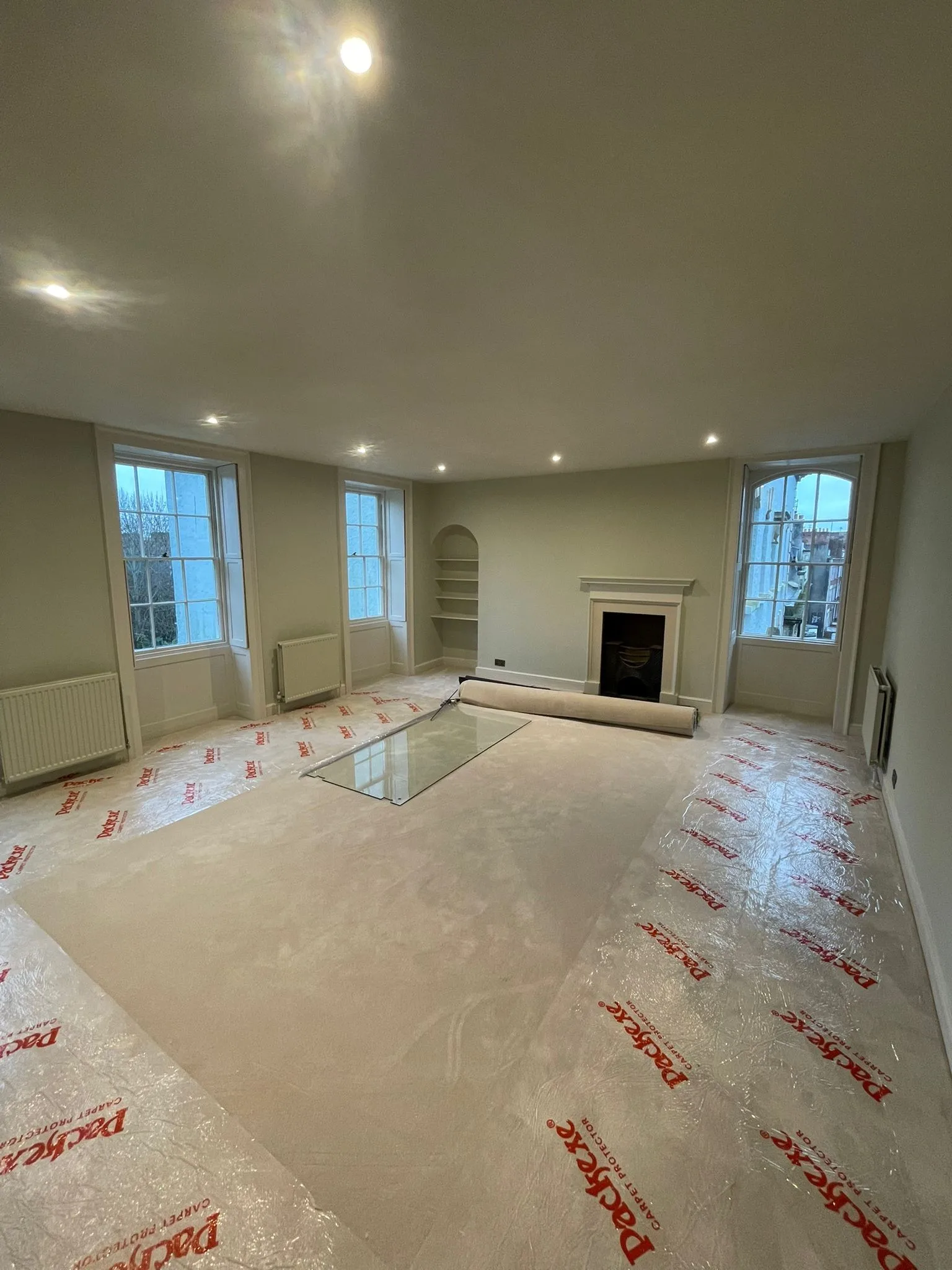
The same room at Dowry Square after redecoration, with the alcove, fireplace and shutters kept and the new floor still protected.
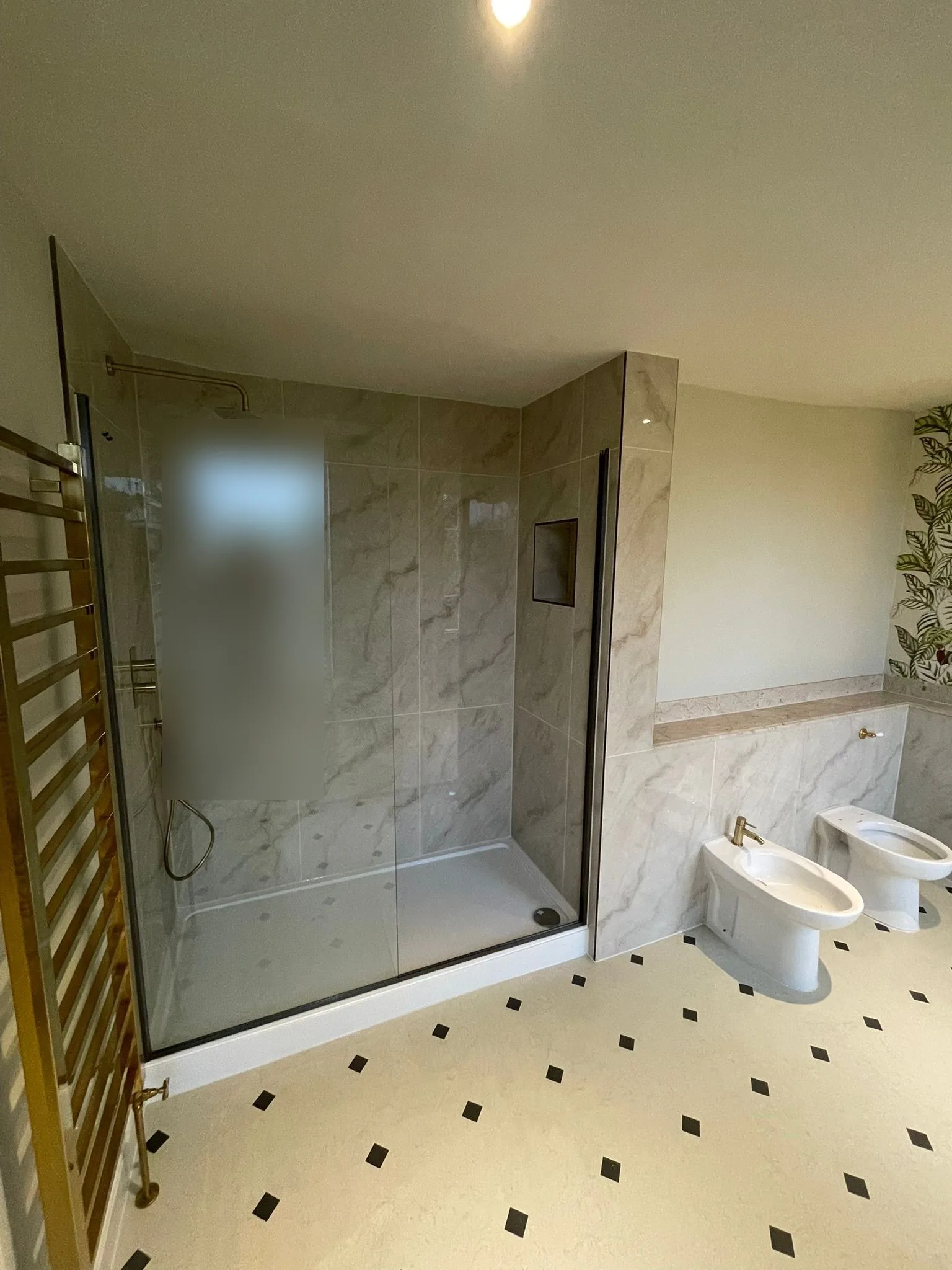
The walk-in shower that replaced the bath in the Dowry Square en-suite. Living in a period house during works is easier than people fear, but there is dust and noise. On a job like this we seal off the rooms we're working in, keep a clean route through the house and clean down every day. Site hours are 8am to 5pm, Monday to Friday. Our guide to living at home during a build explains how, and our house renovation service sets out what we take on.
Frequently asked questions
Should I use lime or gypsum plaster in an old house?
On solid walls, lime is usually the safer choice. It lets the wall dry out, where gypsum tends to hold moisture and break down if the wall gets damp. Where old lime plaster is sound, keep it and patch it in lime.
Can old sash windows be repaired?
Almost always. Bristol City Council's guidance says traditional timber windows can almost always be repaired, even in poor condition, at significantly less cost than replacement. Add draught-proofing, then secondary glazing if you want more warmth.
Do I need permission to renovate a house in a conservation area?
Inside, usually not, unless the house is listed. Outside, controls are tighter: side and roof extensions, some window changes and work to protected trees can need permission. An Article 4 direction can remove more rights, so check with the council first.
How long does a period home refurbishment take?
It depends on the scope. Our Dowry Square refurbishment in Hotwells, covering an en-suite with a new walk-in shower and a bedroom with joinery, flooring and decoration, took seven weeks.
What period features add the most to an old house?
The ones you can't buy again: sash windows, shutters, fireplaces, cornicing, panelled doors and original floorboards. Repairing them usually costs less than replacing them, and it keeps the house looking like itself.
Come and see a site we're working on. That tells you more than any brochure. Tell us about your house and we'll arrange a visit.