Awaab's Law for private landlords does not have a start date yet. That is the plain position on 12 November 2026. The government opened its consultation on 9 October and it closes on 18 December, and it says the earliest feasible implementation date is 2027. But the direction is set, councils already have new fines for the worst hazards, and since Section 21 went in May your tenants have less reason to stay quiet about mould. This piece sets out what applies now, what timescales to plan for, and how we fix damp at the cause on Bristol rentals.
Where the law stands for private landlords
The GOV.UK consultation on extending Awaab's Law confirms the key points:
| Item | Status |
|---|---|
| Social landlords: damp and mould, plus all emergency hazards | In force since 27 October 2025 |
| Social landlords: excess cold, falls, electrical, fire and others | From 30 November 2026, subject to Parliamentary approval |
| Private landlords | Powers in the Renters' Rights Act 2025 (sections 60 and 61); regulations still to be made |
| Consultation | 9 October to 18 December 2026 |
| Earliest private sector start | 2027, in the government's words "the earliest feasible implementation date" |
| Updated HHSRS (21 hazards) | In force since 23 June 2026 |
| Council penalty for failing to keep a let home free of category 1 hazards | Up to £7,000, in force since June 2026 |
The penalty line matters most today. Awaab's Law doesn't create new repair duties: the consultation says it sets timescales for obligations landlords already have. The underlying duty, and the council's power to enforce it, are already live.
The scale is not small. The consultation reports that 22% of privately rented homes failed the Decent Homes Standard in 2024, and that 10% contained a category 1 hazard in 2023. The government's announcement of the consultation puts it as around one in 10. A Decent Homes Standard for private rented homes follows from 2035.
What "within a set time" means for your repair process
The consultation uses the social-sector rules as its starting point, while asking whether they need adjusting for private landlords. If you want to plan your process now, these are the numbers to plan around:
- Investigate a potential significant hazard within 10 working days of becoming aware of it.
- Written summary of findings to the tenant within 3 working days of the investigation ending.
- Make safe within 5 working days of the investigation ending, using temporary measures if needed.
- Further works begun, or steps taken to begin them, within 5 working days, physically started within 12 weeks.
- Emergency hazards: investigate and make safe within 24 hours.
If the home can't be made safe in time, social landlords must arrange suitable alternative accommodation. Whatever the final private-sector version looks like, a landlord who already works to these numbers has little to change.
For a portfolio, the pinch point is the 5-day make-safe. That needs a contractor who can attend, diagnose and do temporary works quickly, not one who can quote in a fortnight.
The five causes we find most in Bristol rentals
Bristol's rental stock is heavy on Victorian and Edwardian terraces and inter-war semis. Our guide to damp in old houses goes deeper. On a property like this, these are the causes we see again and again:
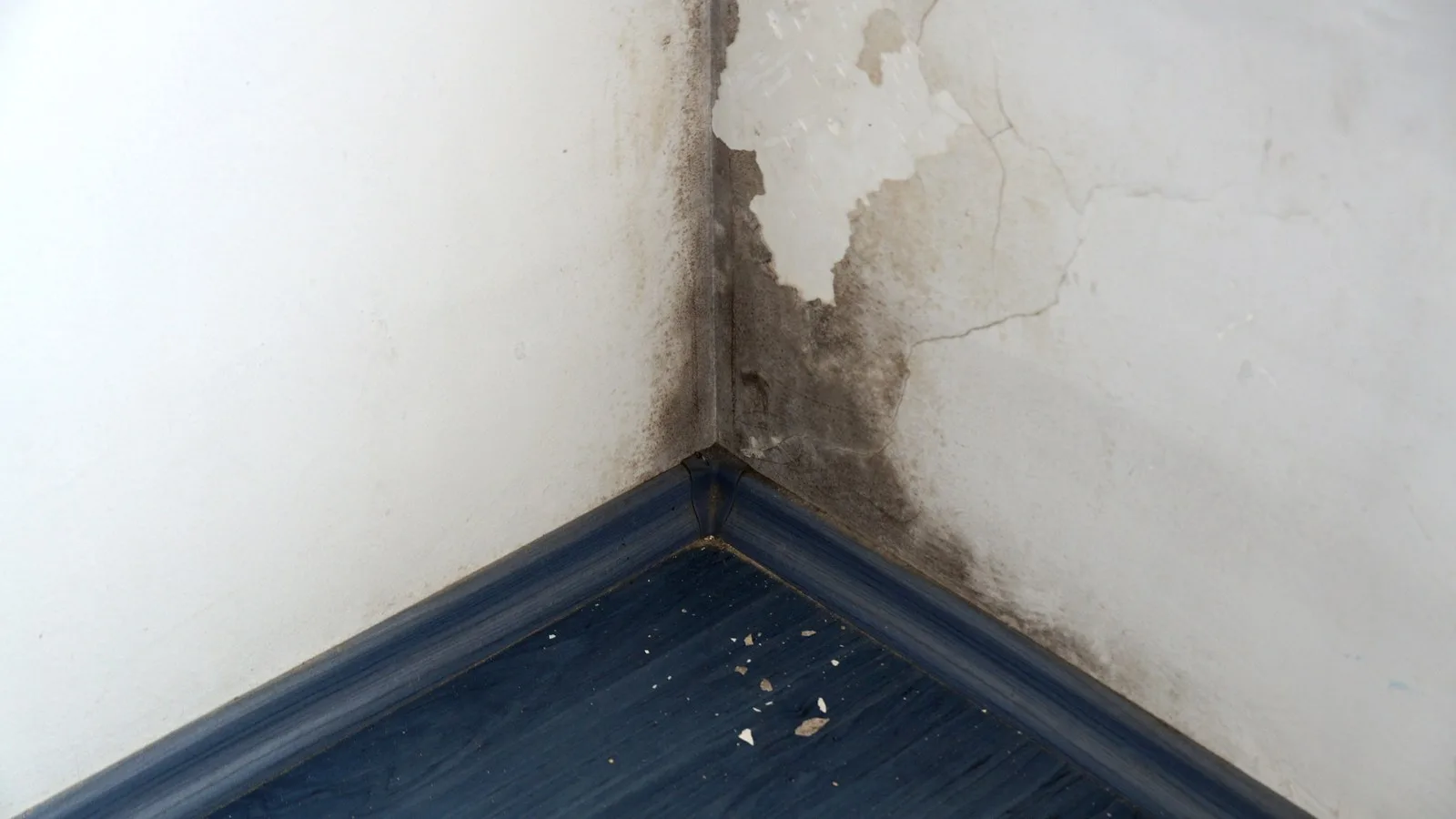
- Condensation with too little ventilation. Drying clothes indoors, no working extract fan, trickle vents taped shut. Mould in ceiling corners and behind wardrobes is the giveaway.
- Failed render or pointing. Cracked render on a solid wall holds water against the brick and lets it through.
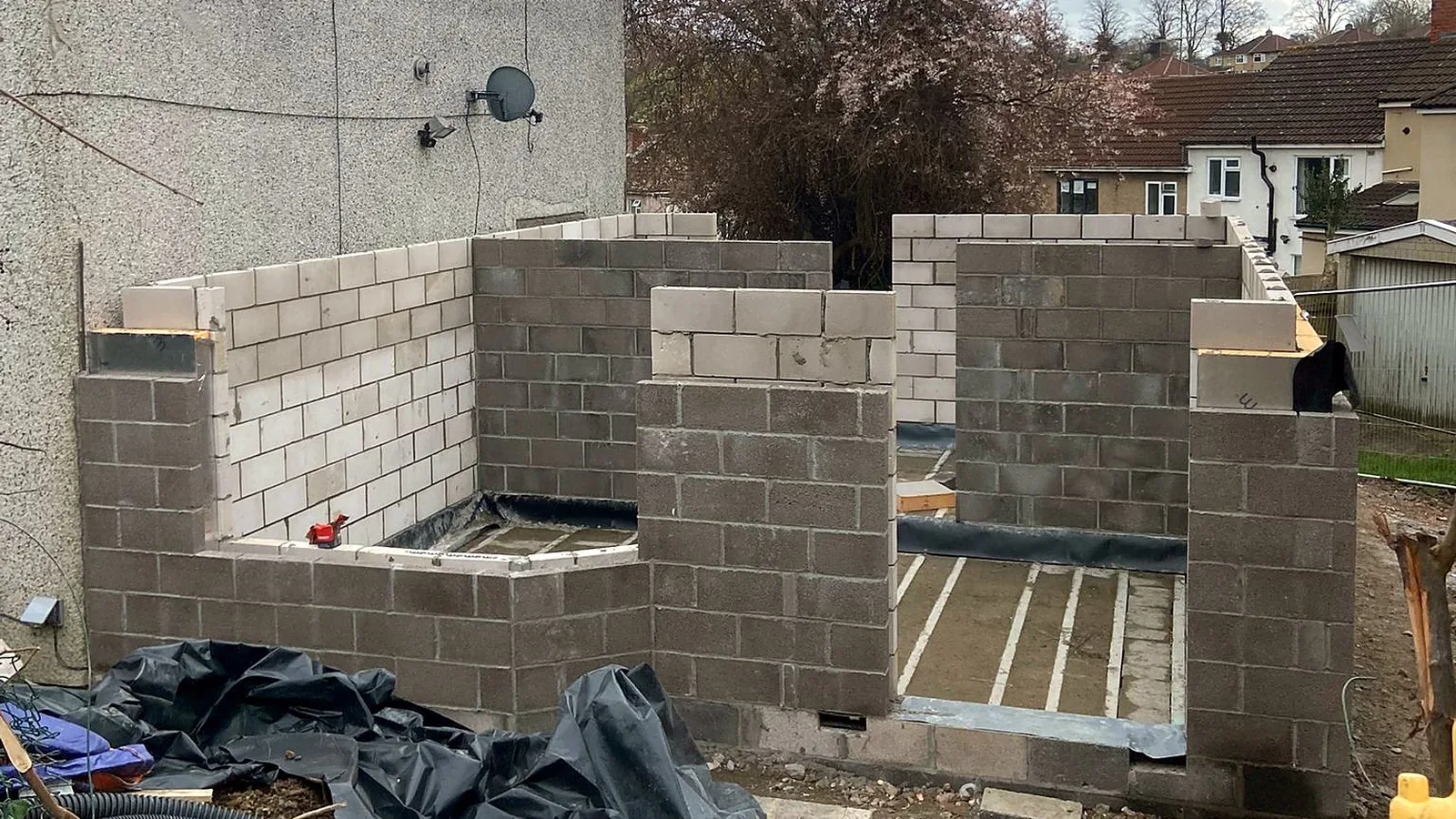
- Bridged damp-proof courses. A patio or path built up above the DPC, or render taken down to the ground, lets damp rise around it.
- Leaking gutters and downpipes. A blocked hopper soaks one patch of wall every time it rains.
- Cold bridges and blocked cavities. Uninsulated window reveals, or cavities full of debris, give cold spots where condensation settles.
Fix the cause, then the symptom: the order of works
Mould wash and a coat of stain block buy you a few months. To stop it coming back, the work goes in this order:
- Survey and diagnose. Moisture readings, a look at the outside, and a conversation with the tenant about how the rooms are used.
- Stop water getting in. Gutters, downpipes, render, pointing, flashings, lowered ground levels.
- Ventilation. Extract fans to kitchen and bathroom, working trickle vents, or positive input ventilation for a whole house. New fans are wired by NICEIC-registered electricians.
- Insulation and cold bridges. Insulated reveals, internal wall insulation where it suits, loft top-ups.
- Make good and decorate. Replaster where needed, then treat and redecorate.
Step 4 often overlaps with EPC work for the 2030 target. Our energy retrofit pages cover that side.
Costs, phased between tenancies
Every property is different, so we price each one on a detailed, itemised quote, with the price changing only if you agree the change first. Itemising lets you phase the work:
| Can usually happen with tenants in | Best done in a void |
|---|---|
| Gutters, downpipes, external pointing | Internal wall insulation and replastering |
| Extract fans and trickle vents | DPC remedial work and floor lifting |
| Loft insulation top-ups | Full redecoration of affected rooms |
Our guide to refurbishing between tenancies explains how we programme void work. Two numbers for your accountant: VAT on installing qualifying energy-saving materials is 0% until 31 March 2027 and returns to 5% from 1 April 2027, confirmed in the Budget 2026 document. Whether that applies to your work, and how repairs are treated for tax, is a question for them, not us.
Records that protect you
Under the social-sector model, much of the burden falls on showing what you did and when. Keep, for every report of damp or mould:
- the date and how the tenant reported it
- the date of inspection, who carried it out, and photos with moisture readings
- the written summary you gave the tenant
- dates of make-safe and follow-on works, with invoices
- after photos and any re-test readings
Ask whoever does the work for dated before-and-after photos and a written scope; they slot straight into that file. None of this guarantees a particular outcome with a council or a court; it shows you acted.
For the wider set of rules landlords face, see our pieces on the Renters' Rights Act and refurbishment and HMO licensing in Bristol. We're SafeContractor approved (certificate OC4217) and TrustMark registered (licence 4264445), and our renovation team works across Bristol, Bath and South Gloucestershire.
Frequently asked questions
Does Awaab's Law apply to private landlords yet?
Not yet. The Renters' Rights Act 2025 gives the government the power, but regulations are still needed. The consultation runs to 18 December 2026 and the government says the earliest feasible implementation date is 2027. No start date has been set.
What timescales does Awaab's Law set?
For social landlords: investigate within 10 working days, give a written summary within 3 working days, make safe within 5 working days and start further works within 12 weeks. Emergencies must be dealt with within 24 hours. The private-sector consultation starts from these numbers.
Can a council fine me for damp and mould now?
Yes, if it's a category 1 hazard. Since June 2026, councils can issue penalties of up to £7,000 to private landlords who fail to take reasonably practicable steps to keep a property free of category 1 hazards, alongside existing powers such as improvement notices.
Is mould always the tenant's fault?
No. Condensation from daily living plays a part, but in older Bristol homes we usually find a building cause too: poor ventilation, cold bridges, failed render, bridged DPCs or leaking gutters. Fixing those is what stops it coming back.
What should I keep as evidence of damp repairs?
The date of each report, inspection notes, dated photos with moisture readings, the summary given to the tenant, dates of works and invoices. Keep it per property, in one place.
If damp is on your list for this winter, start with the cause. Send us the spec or the property list. We'll price it.