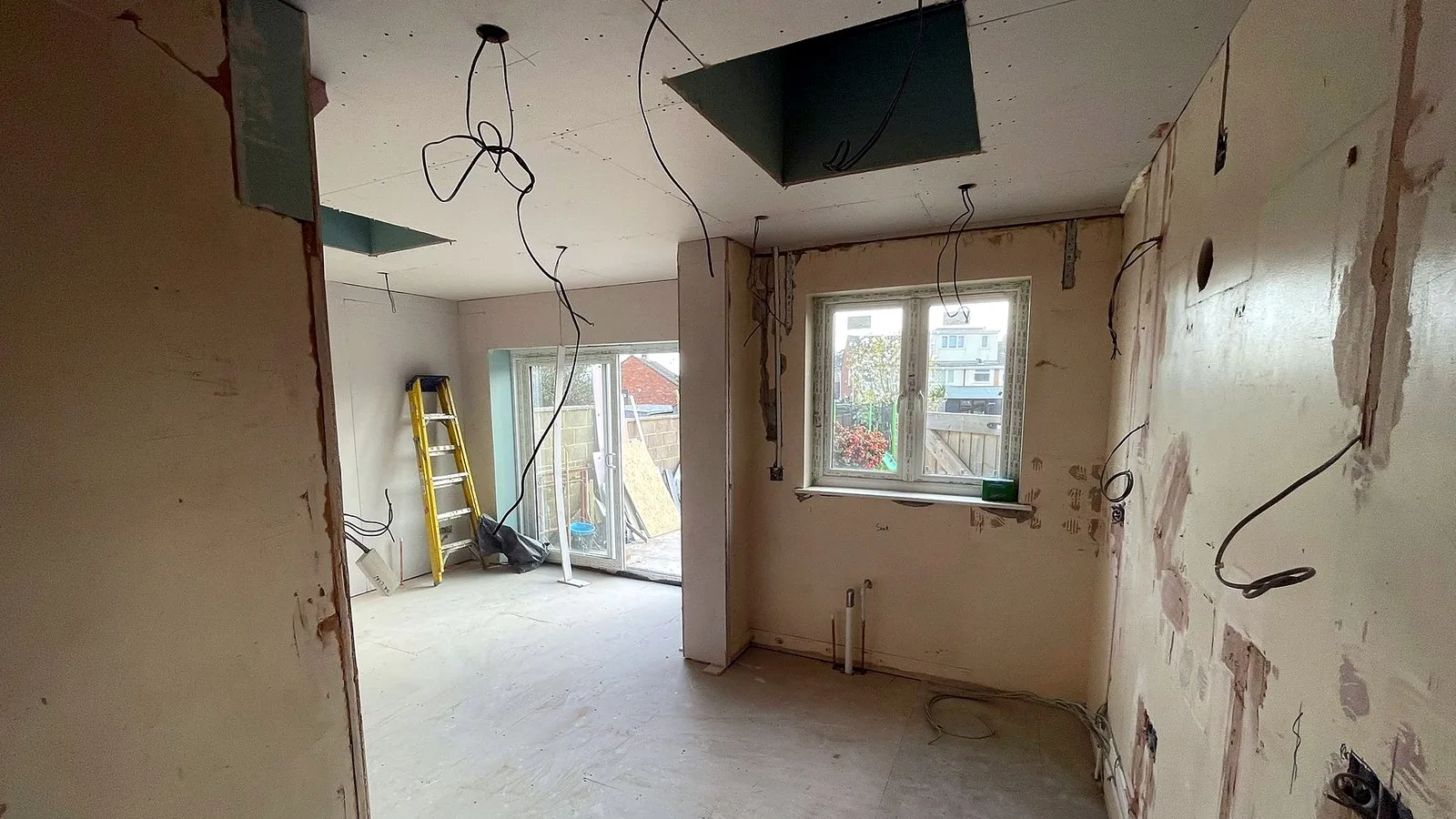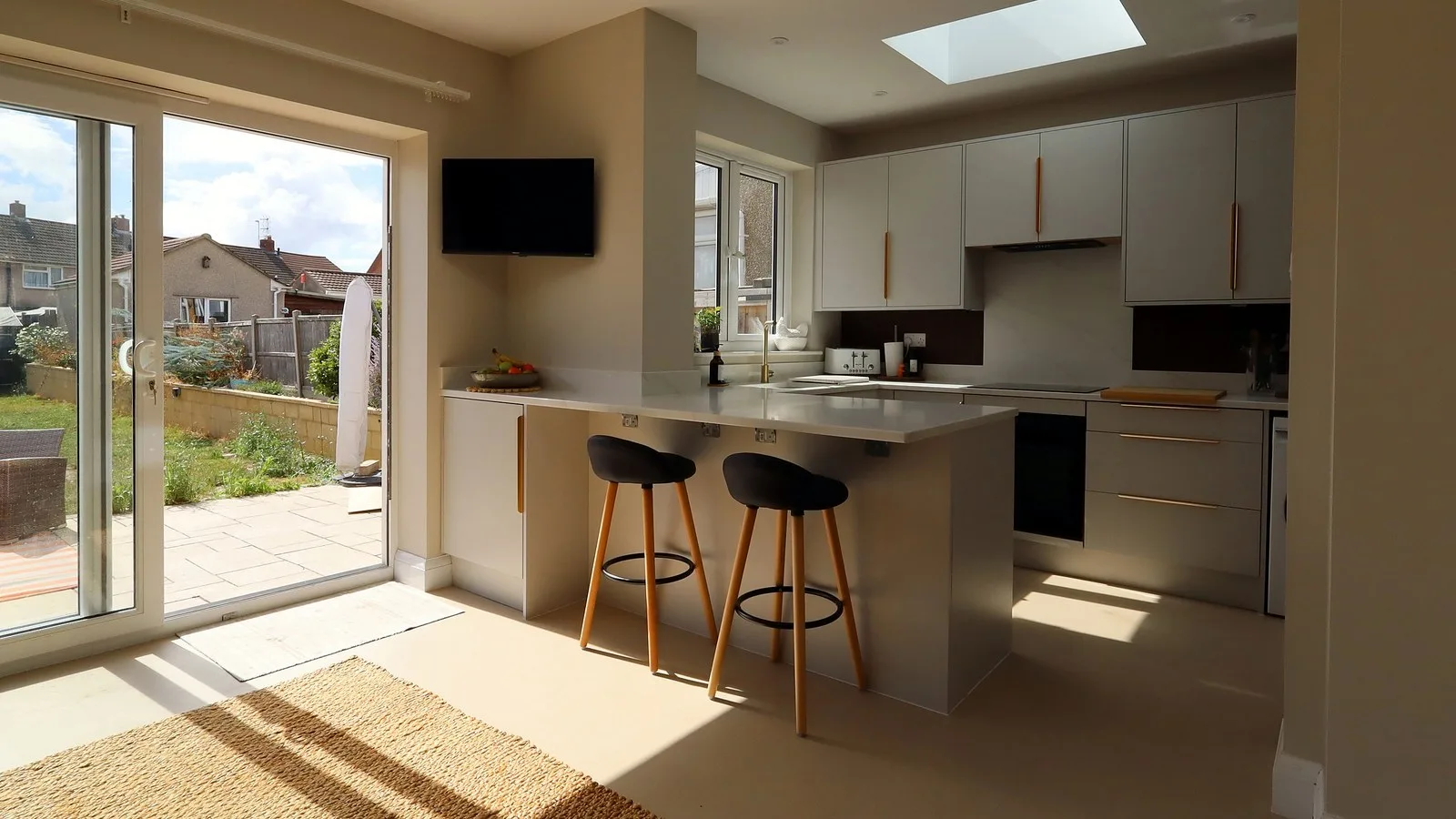
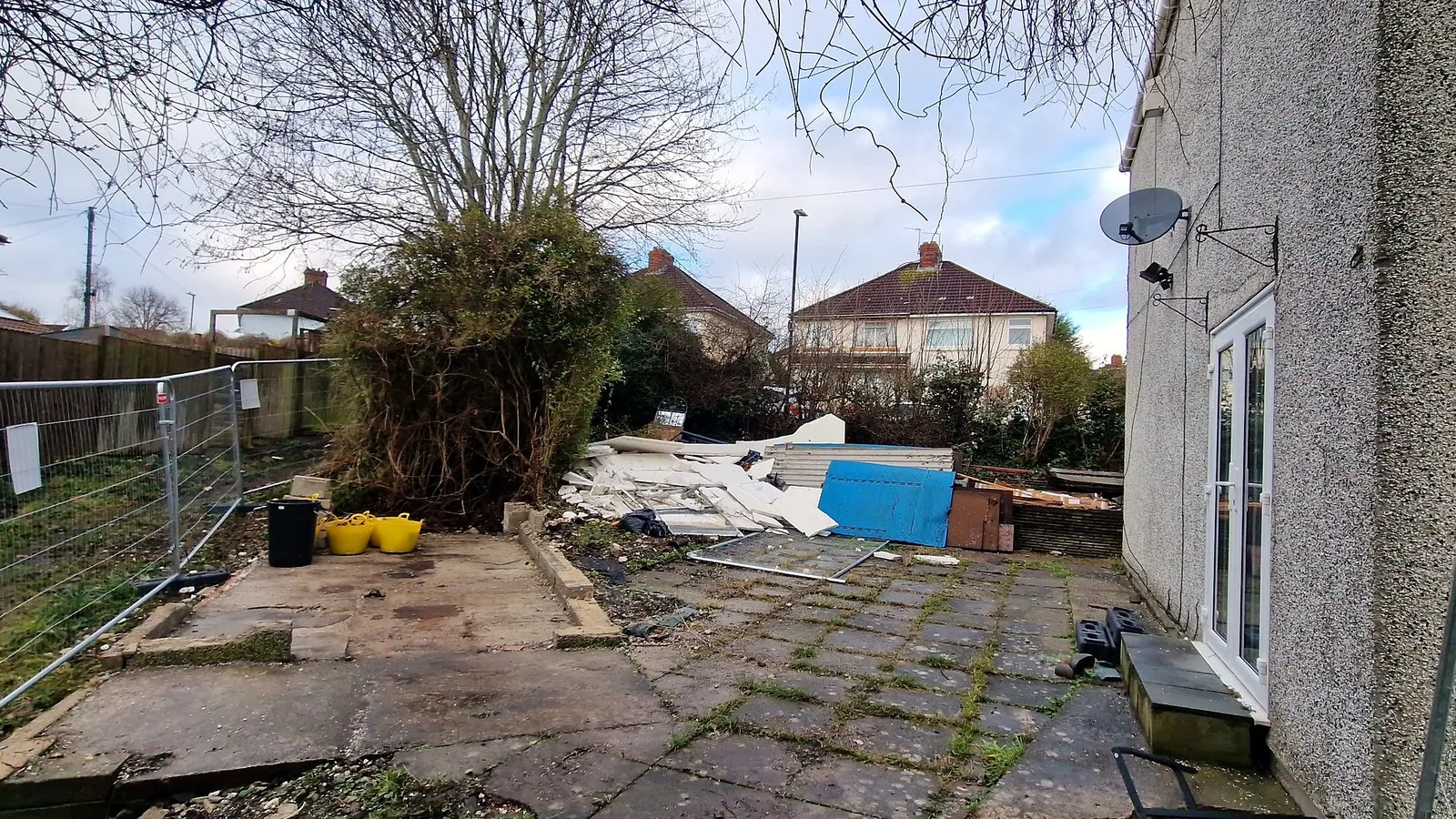
The clocks go back at 2am on Sunday 25 October, according to GOV.UK. Overnight, the evenings get darker and plenty of homeowners decide their extension can wait until spring. It doesn't have to. Building an extension in winter is normal for us. Most of the work carries on; what changes is the planning around cold, wet and dark. Our proof is a house in Brislington: we dug its foundations in February, in winter ground, and had finished rooms the same year.
The short answer: most of an extension can be built in winter
Here's how the main stages fare between November and February:
| Stage | In winter? | What we do |
|---|---|---|
| Excavation and foundations | Yes | Pour on unfrozen ground, cover the concrete |
| Drainage | Yes | Pump out wet trenches, test before backfilling |
| Blockwork and brickwork | Yes, on the right days | Stop below 3°C and falling, cover new work |
| Roof structure | Yes | Temporary roofs and wraps where needed |
| First fix and plastering | Yes, once weathertight | Heat and ventilate so it dries properly |
| External render | Depends on the weather | Wait for mild, dry days or spring |
The rule underneath all of it: get the building weathertight, then winter stops mattering much.
Building an extension in winter: groundworks and concrete in the cold
Groundworks are the part people expect to stop in winter, and they mostly don't. Frost is the obvious worry, but the commoner problem is water: trenches that fill overnight and soften the bottom. On a job like this we keep excavation and pouring close together, so trenches don't sit open in the rain waiting for an inspection.
Concrete needs looking after. Chapter 3.2 of the NHBC Standards 2026, on cold weather working, sets out good practice:
- ready-mixed concrete should arrive at no less than 5°C
- it shouldn't be placed on frozen ground, or against frozen surfaces
- it should be covered to keep it above freezing, and heated if necessary
- for slight overnight frosts, 50 mm of insulation held down at the edges protects an oversite slab
- for site-mixed concrete, work stops if the air drops to 2°C unless strict conditions are met
None of that is exotic. It means checking the forecast, having insulation and sheeting on site, and moving a pour by a day when the weather says so. Our groundworks team is in-house, so a moved pour costs a day, not a fortnight waiting for a subcontractor's next slot.
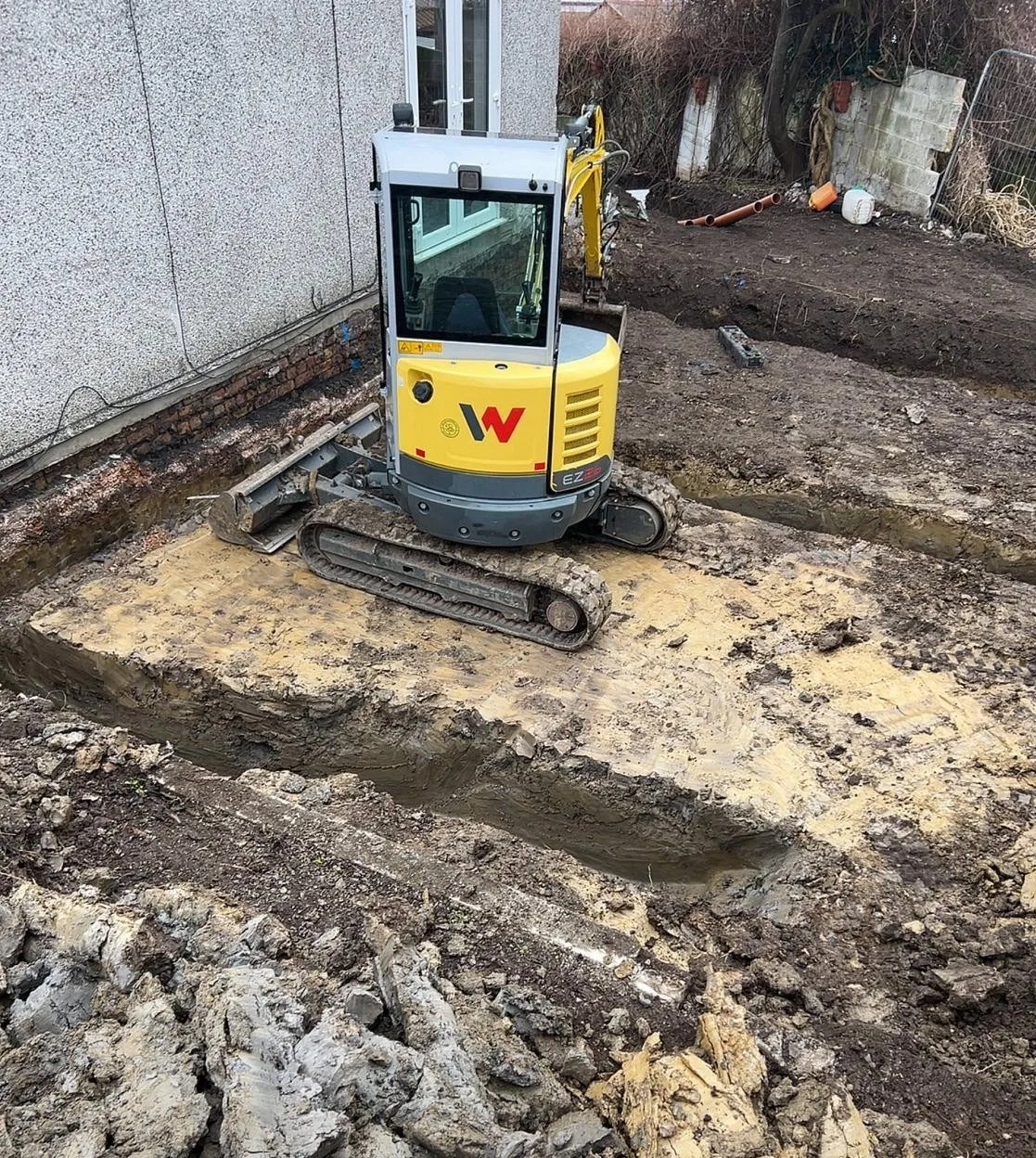
Digging foundations at Sherwell Road, Brislington, in February 2026.
Bricks, blocks and mortar
Mortar that freezes before it sets loses strength, so the NHBC guidance is specific. Brickwork and blockwork shouldn't be built when the air is below 3°C and falling. Work can resume at 1°C and rising, if it's expected to pass 3°C. Frozen or frost-damaged materials aren't used. New walls are covered with polythene, leaving an air gap so the masonry can cure, and in hard frosts that protection can stay on for up to six days.
On a winter job like this we keep bricks, blocks and sand covered on pallets, start laying once the morning has warmed up, and sheet the work before we leave. Any admixture goes in exactly as the manufacturer specifies.
Keeping the weather out: temporary roofs and scaffold wraps
The biggest risk in winter is rain on an open structure. Two tools deal with it. A scaffold wrap, sheeting around the scaffold, keeps wind and driven rain off the work. A temporary roof, a sheeted roof built on the scaffold over the whole job, lets carpenters work on a roof structure in any weather.
At Sherwell Road we cut the roof by hand in April under a temporary scaffold roof, with the house wrapped. On an extension, we aim to get the new shell weathertight before opening up the back of your house, wherever the design allows. That way your heating stays on and the house stays sealed from the work for longer. For the rest of the disruption, read our guide to living at home during a build.
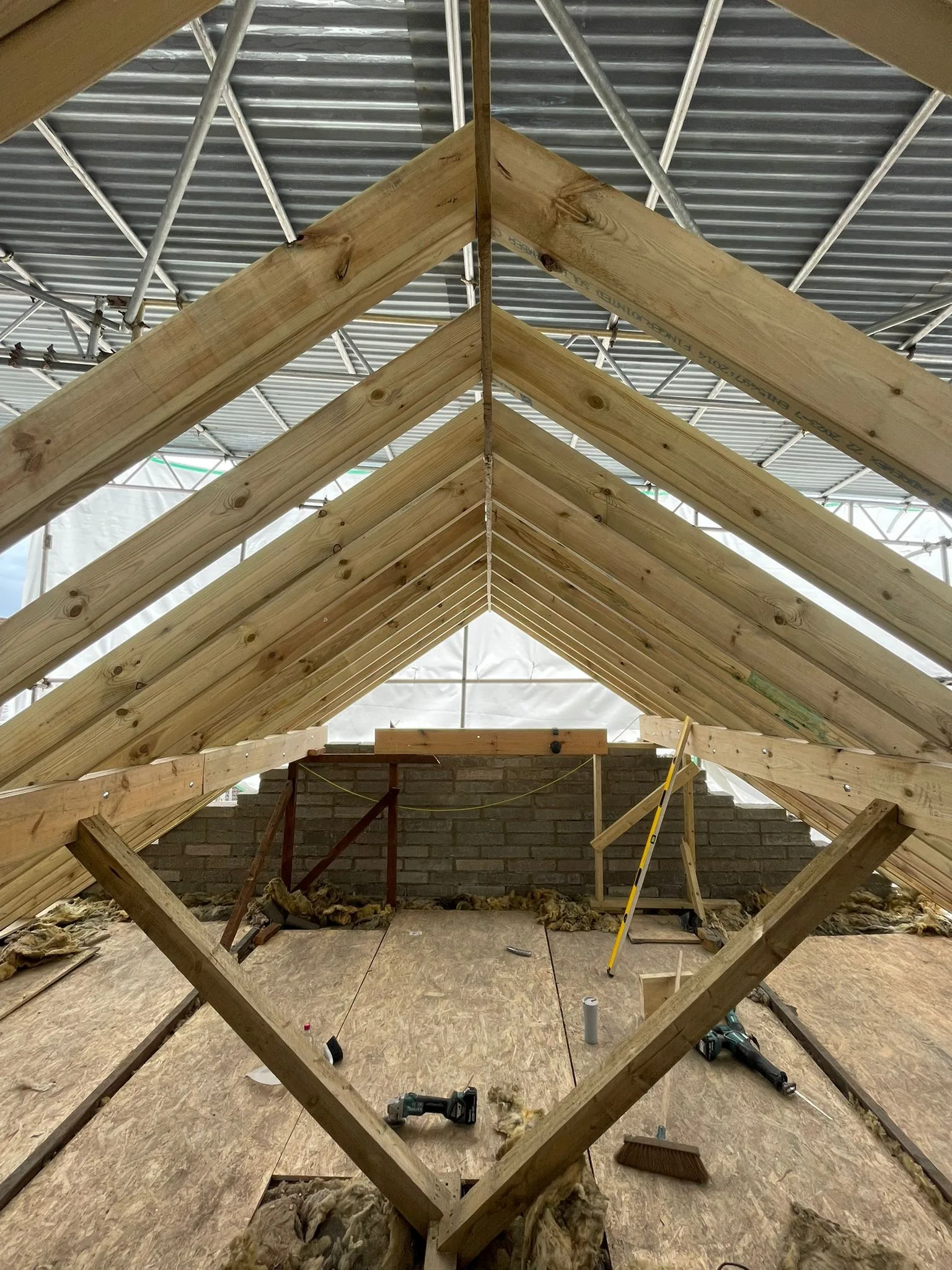
Roof timbers going up under the temporary scaffold roof at Sherwell Road in April 2026.
Shorter days, same standards: how we plan the programme
After the clocks change, the light goes fast. In Bristol the earliest sunset of the year is just after 4pm in mid-December, and the shortest day has under eight hours of daylight, according to sunrise-sunset.org's Bristol tables. Our site hours stay 8am to 5pm, Monday to Friday, all year. What changes is the order of the day:
- outside work that needs light and dry weather, like roofing and external brickwork, goes in the middle of the day
- inside work under site lighting fills the dark ends
- wet days move to internal tasks rather than standing the job down
- the programme carries weather days from the start, and you're told how many
Short, dark, slippery days also need more care on scaffolds and access routes. We're SafeContractor approved (certificate OC4217), and winter sites get extra attention to lighting and safe access.
Drying is the other change. Plaster and screed dry slower in cold, damp air. On a job like this, once the extension is weathertight we heat and ventilate it, and the flooring waits until the screed is dry.
What does wait for spring, and what doesn't
Very little has to wait. External render is the main one. The NHBC guidance says site-mixed render needs at least 5°C and rising, never on a frozen or saturated wall, so in a cold snap the render waits for a mild spell, or for spring. Turf, planting and the patio are easier once the ground has dried.
Everything else carries on: foundations, drains, walls, roof, windows, first fix, plastering, kitchen. A winter start also gets a builder's full attention while others are still booked from the summer. If you're deciding when to begin, our plan in October, build in spring timeline shows the other route.
Proof: a February start that finished the same year
Sherwell Road in Brislington is a new three-bedroom house, but the winter lessons are the same as for an extension. One team, end to end:
| Month (2026) | Stage |
|---|---|
| February | Excavation, foundations and drainage in winter ground |
| March | Blockwork and a block-and-beam ground floor |
| April | Roof framed under a temporary scaffold roof; first-floor deck |
| May | Timber stud partitions |
| July | Weathertight, windows in |
| August | Tiled and rendered |
| Then | Herringbone parquet, staircase, finished rooms |
Seven months. One team. No handovers. The full story is on the Sherwell Road project page, and the same way of working runs our house extensions.
Frequently asked questions
Can you build an extension in winter?
Yes. Most stages carry on through winter: foundations, drainage, walls, roof and everything inside once it's weathertight. Concrete, mortar and render need cold-weather precautions, and some days are lost to frost or heavy rain, which we build into the programme from the start.
Can concrete be laid in winter?
Yes, with precautions. NHBC guidance says ready-mixed concrete should arrive at 5°C or more, never go onto frozen ground, and be covered to keep it above freezing. An oversite slab gets insulation over it when overnight frosts are expected.
What temperature is too cold for bricklaying?
NHBC guidance says brickwork and blockwork shouldn't be built when the air is below 3°C and falling. Work can restart at 1°C and rising if the temperature is expected to pass 3°C, and new walls are covered to protect them from frost.
Will winter weather delay my extension?
It can cost a few days to frost or heavy rain, so a winter programme should carry weather days from the start. Getting the shell weathertight early protects the rest of the build.
Do builders work shorter hours after the clocks go back?
Our site hours stay 8am to 5pm, Monday to Friday, all year. On winter jobs, daylight work goes in the middle of the day and internal work under lighting fills either end.
We have capacity this winter. Let's talk before it's gone: tell us about your extension.